
Insights & News
Insights
Beyond the First Job: Building Semiconductor Career Pathways The semiconductor industry is investing heavily in talent.
Micron's recently announced record employee rewards in Taiwan highlight the significant investment semiconductor manufacturers are making in their workforce.
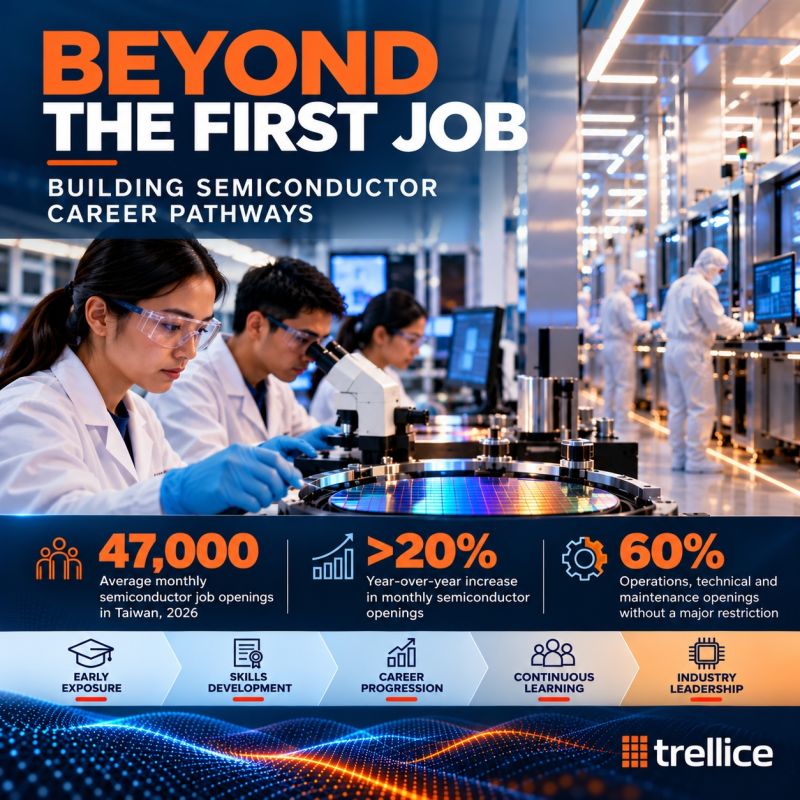
At the same time, Taiwan's semiconductor industry averaged approximately 47,000 monthly job openings in 2026, with reported demand growing more than 20% year over year. These developments highlight two connected priorities: attracting new talent and developing the workforce already entering the industry. That is where the talent pipeline must become a career pathway. Across Taiwan and the broader Asia-Pacific semiconductor ecosystem, universities, polytechnics and technical institutions play a critical role in workforce development. But industry readiness cannot be measured solely by graduation rates, certifications or initial job placements. Three priorities deserve attention: - Career visibility: Help students understand compensation structures, technical career progression and long-term opportunities. - Progressive skills development: Connect foundational training with advanced capabilities in process engineering, equipment maintenance, yield improvement, packaging and manufacturing operations. - Learning beyond graduation: Establish employer-aligned pathways for continuous upskilling, mid-career reskilling and advanced technical specialization. This requires closer collaboration between semiconductor manufacturers, educational institutions and workforce development partners. The semiconductor workforce challenge is not simply bringing more people into the industry. It is building the capabilities and career opportunities that encourage them to stay. The first job brings talent into semiconductors. The career pathway gives that talent a reason to stay.
Media contact
Trellice
Media Relations
info@trellice.com